Fencing & Compost Area Construction
Planning and building a new fence project.
Introduction
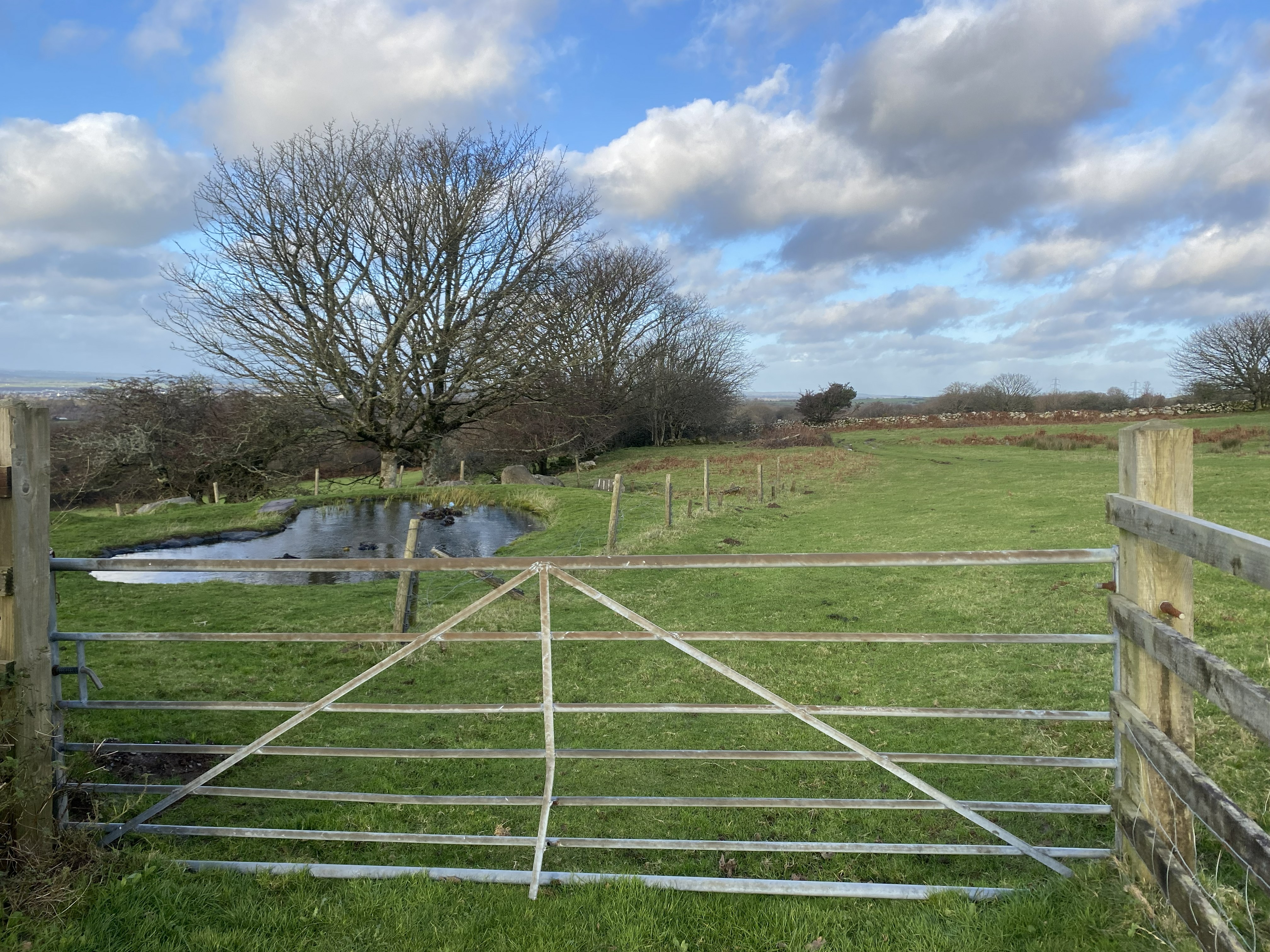
The area before any construction or planning
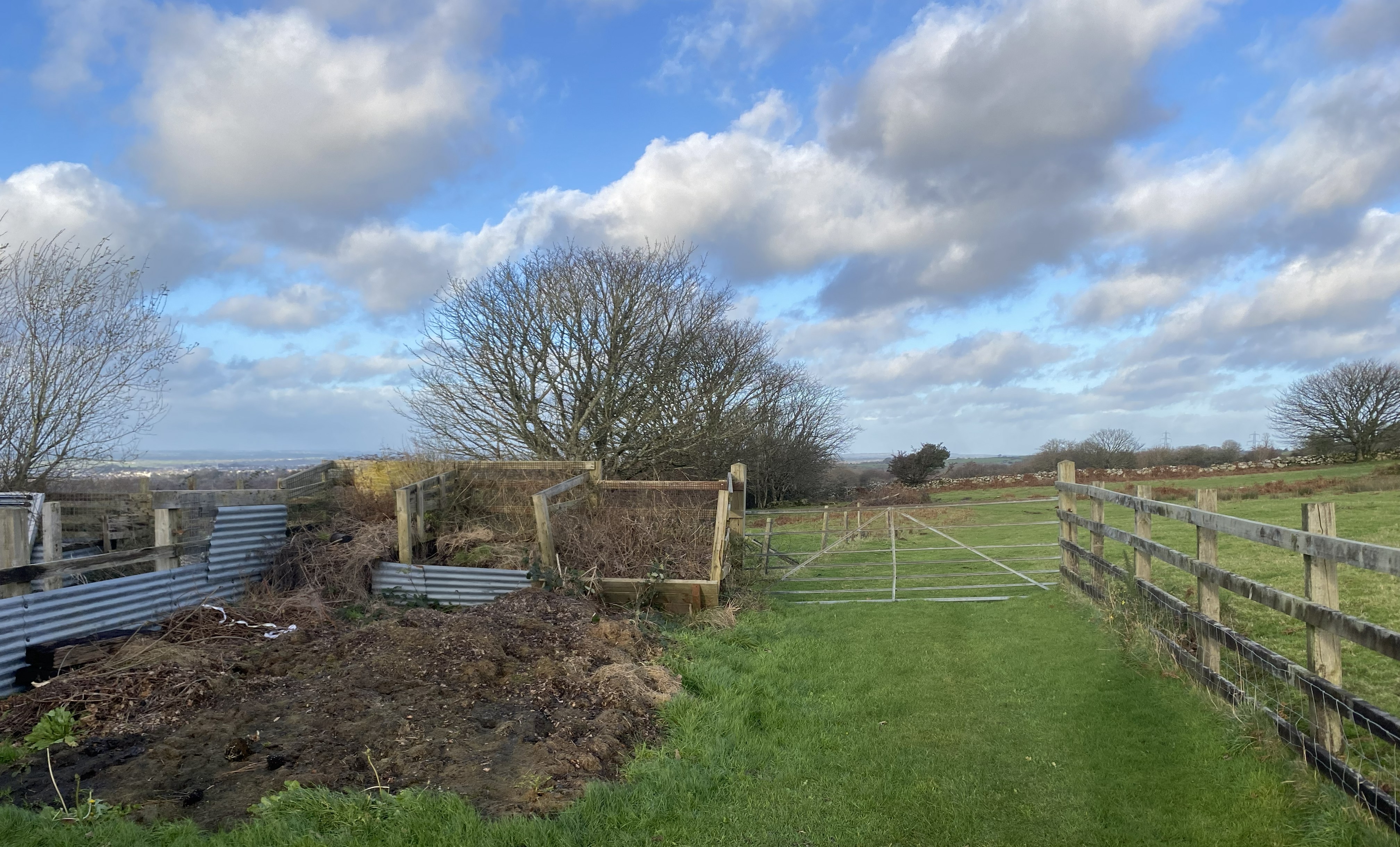
Left: The overflowing compost heap
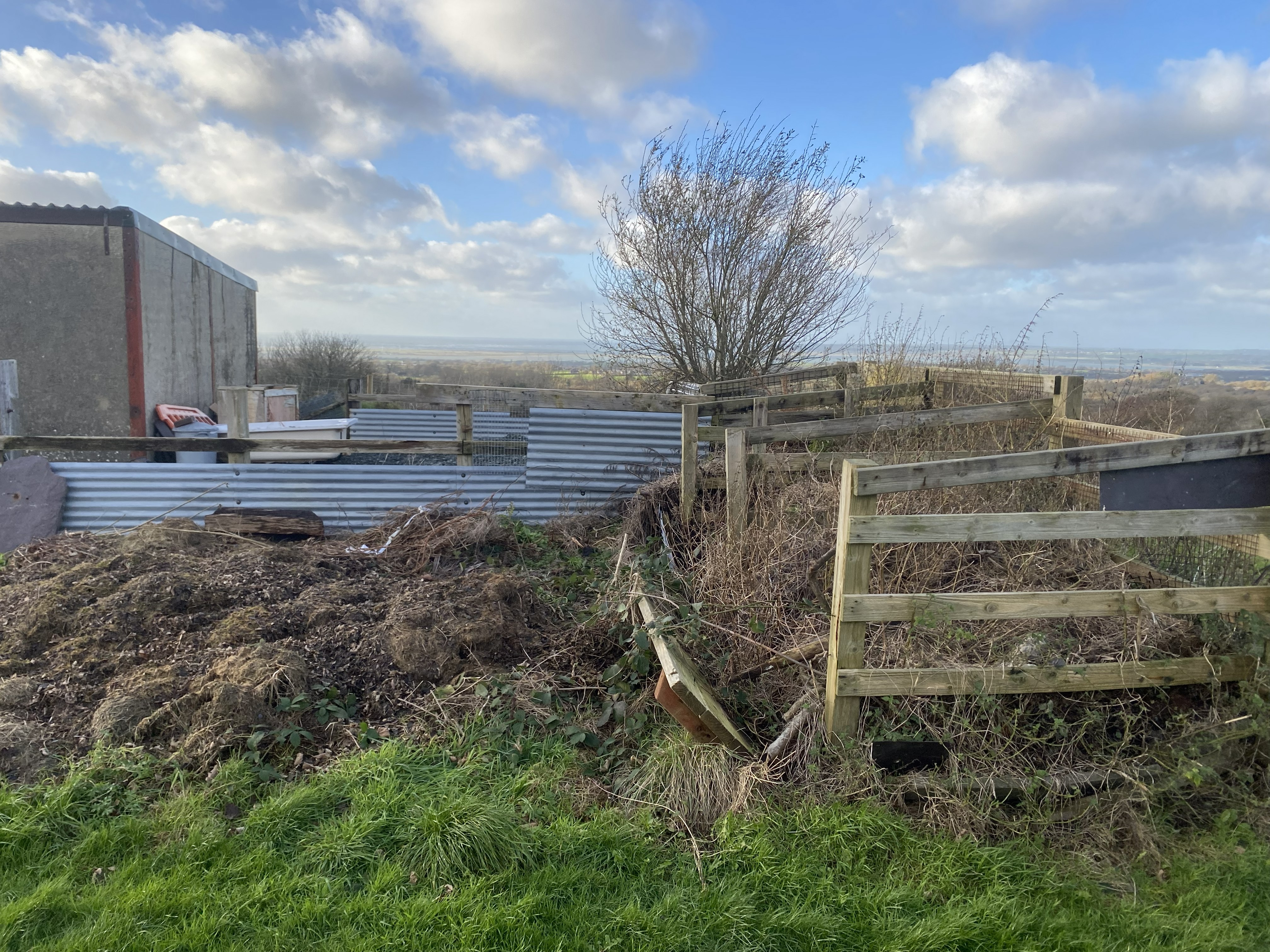
The side view of the original compost heap
The main reason for building this fence was to replace the old, tired one around the pond. Since there are sheep on the land, the pond had become a secondary water source for them, and with no fence to protect it, the level of water in the pond drops dangerously low during dry spells. The plan for the new fence was to push back the bounday by a few meters, giving us better access to the pond and the surrounding area, while also creating a new compost area to manage the organic waste from the property. The compost heap we had before this was overflowing and crumbling due to the sheer ammount of organic waste we had, so the new design was much larger and more easily accessible.
This wasn't going to be an easy project, as I had no previous experience with large fencing. The ground around the area for the new fence was quite uneven and had many rocks under the ground. The soil type also changed over the span of the fence, with some areas being very clay heavy and others being more sandy. This meant that I had to adapt my excavation methods as I went along, which was a great learning experience.
The Plan
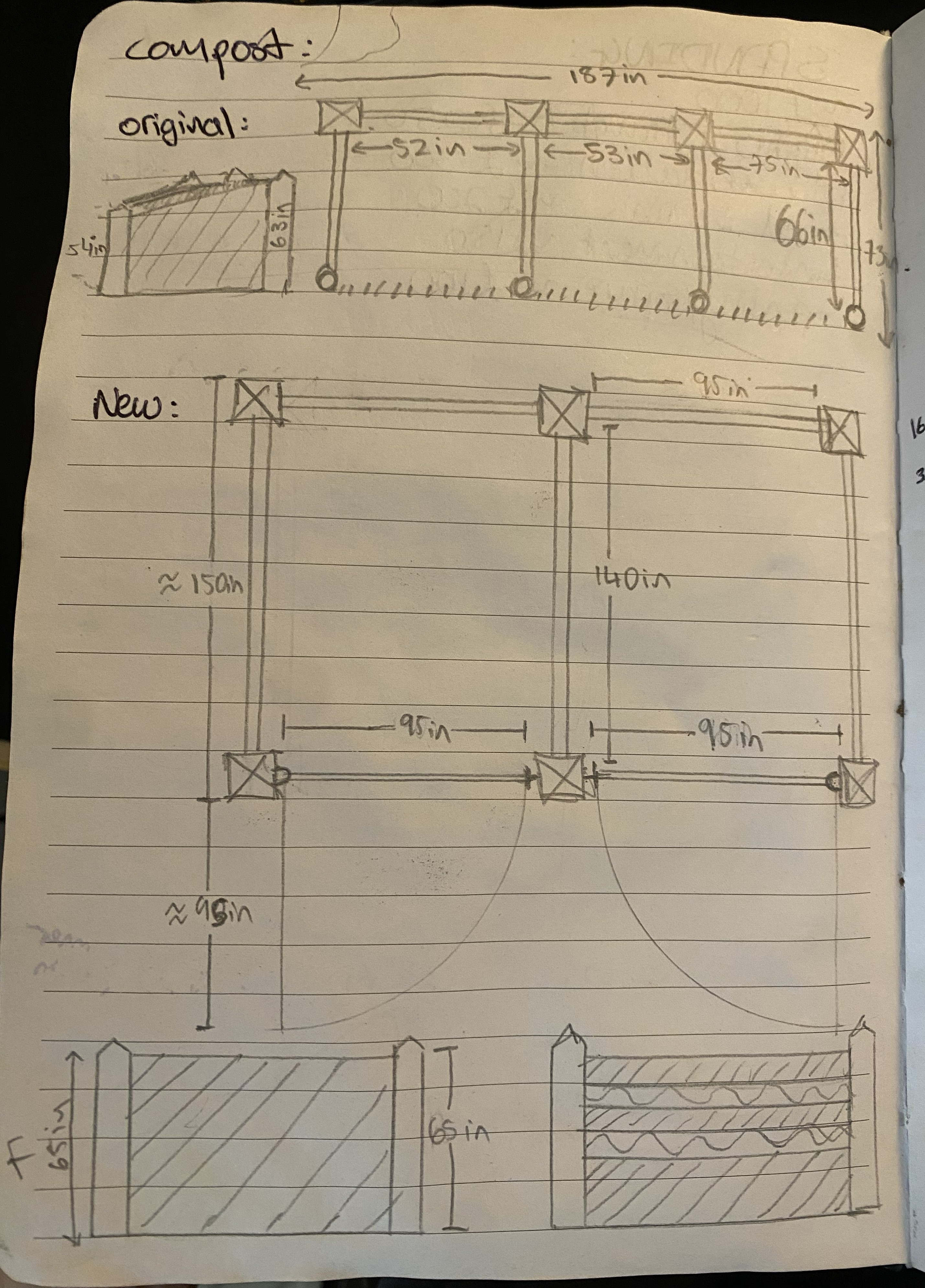
Original design sketches for the compost heap
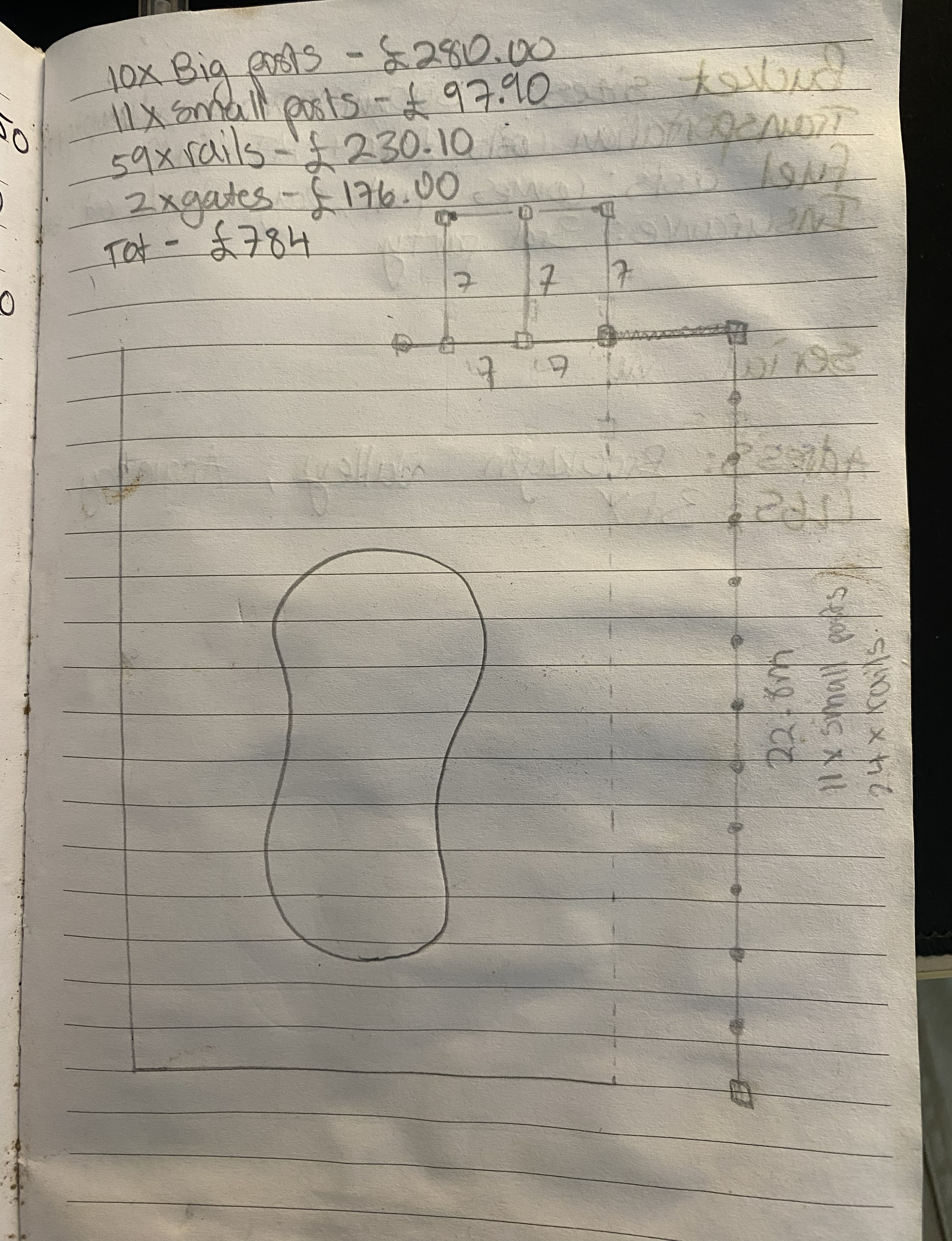
Plans and materials for the main fence
Before any work could be done, I had to ensure that we had the right number of materials for the area that the fence would cover. I calculated the number of posts, rails and gates I would need, as well as ensuring that I could complete the project within the timeframe that we would be hiring the digger for. The less time I had to spend with the digger, the more cost effective the project would be, so I had to make sure that I had everything ready to go before the digger arrived.
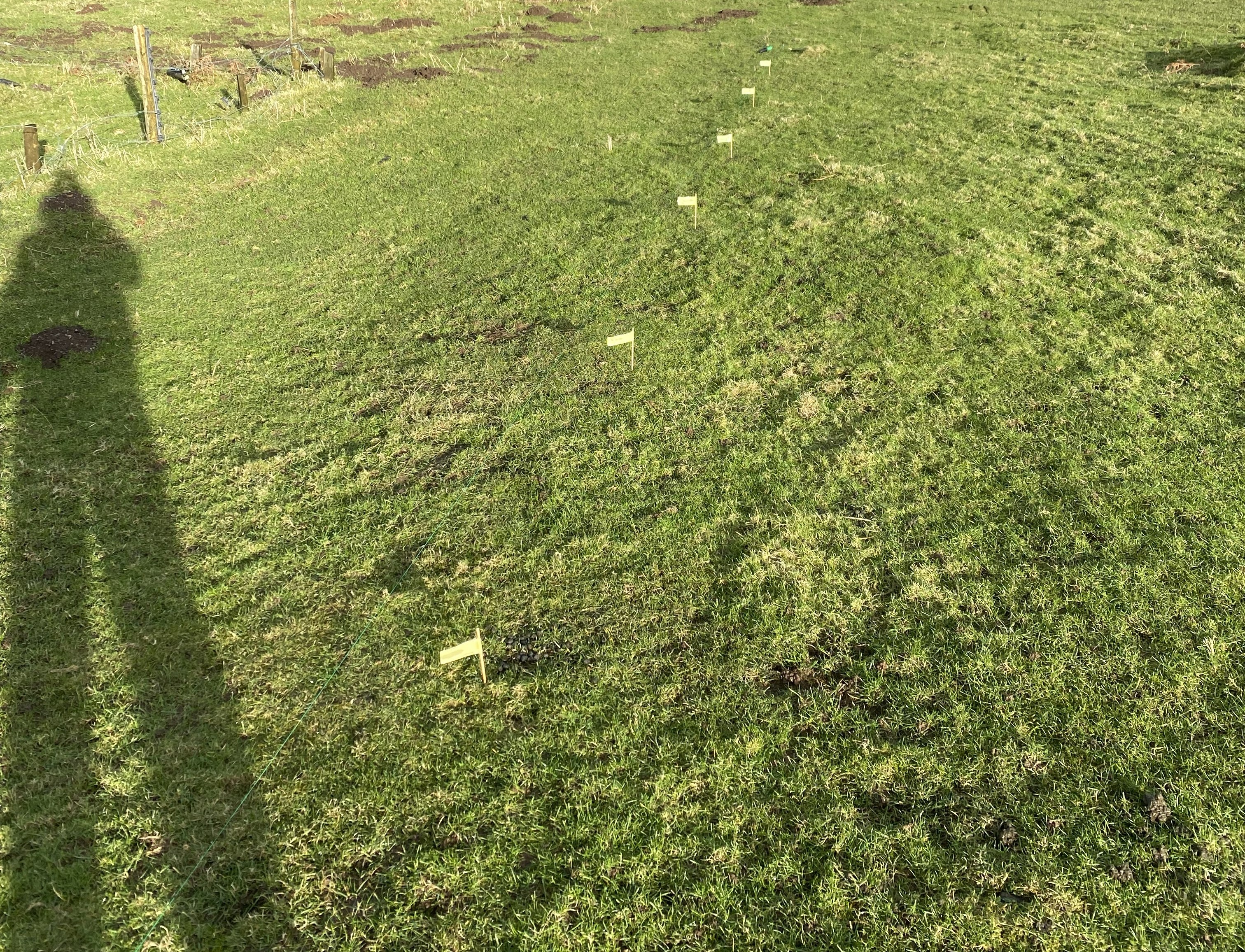
Marking the area with string and notes.
Before investing any money into the project, I marked out the area with string and made notes which corresponded to the locations and type of posts I would be using. This was another safety check to make sure that I had the right ammount of materials, and also to make sure that I had a clear plan for the construction phase. It also helped me to visualise the project and identify any potential issues before I started digging holes.
Progress & Construction
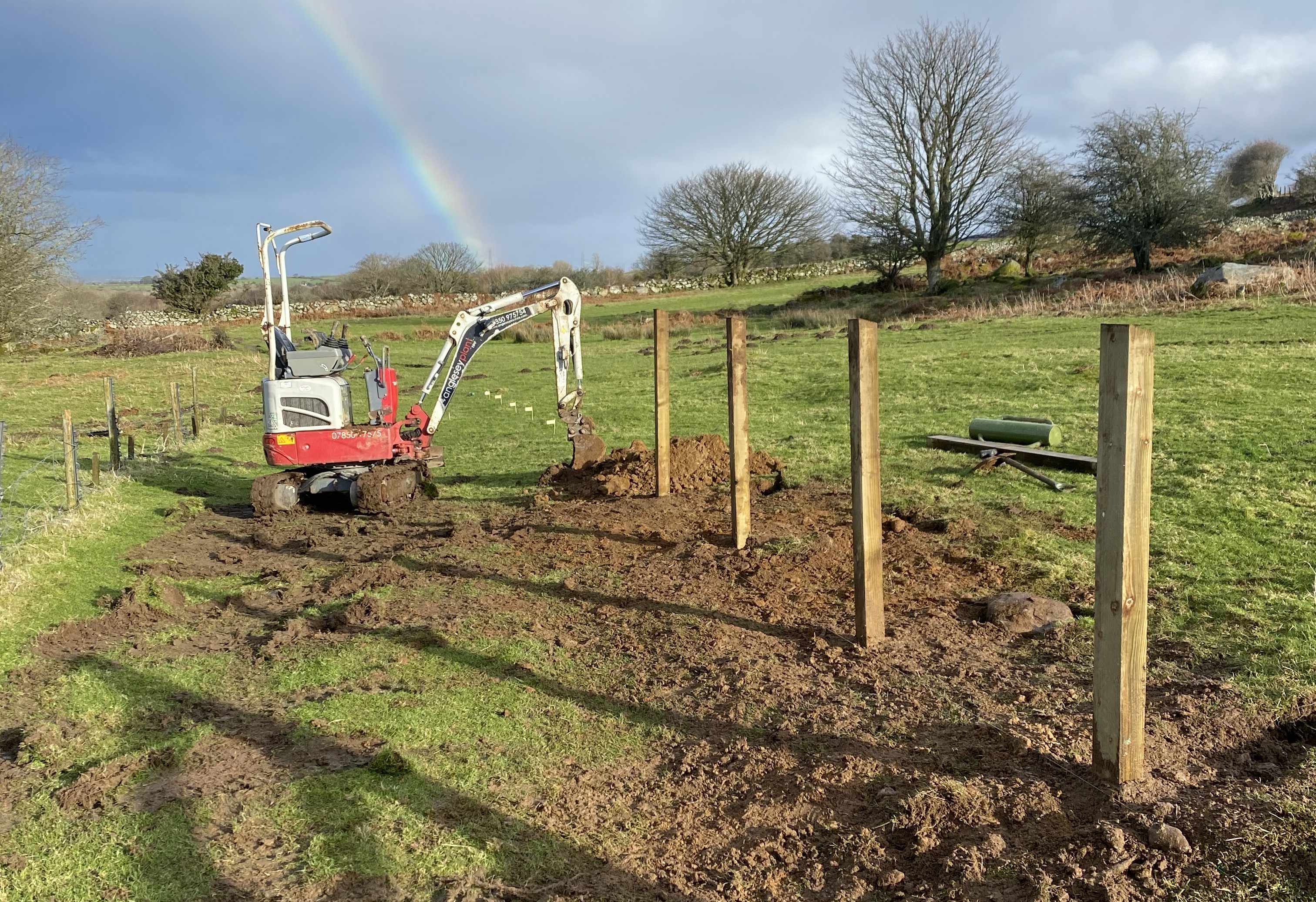
The first few posts in
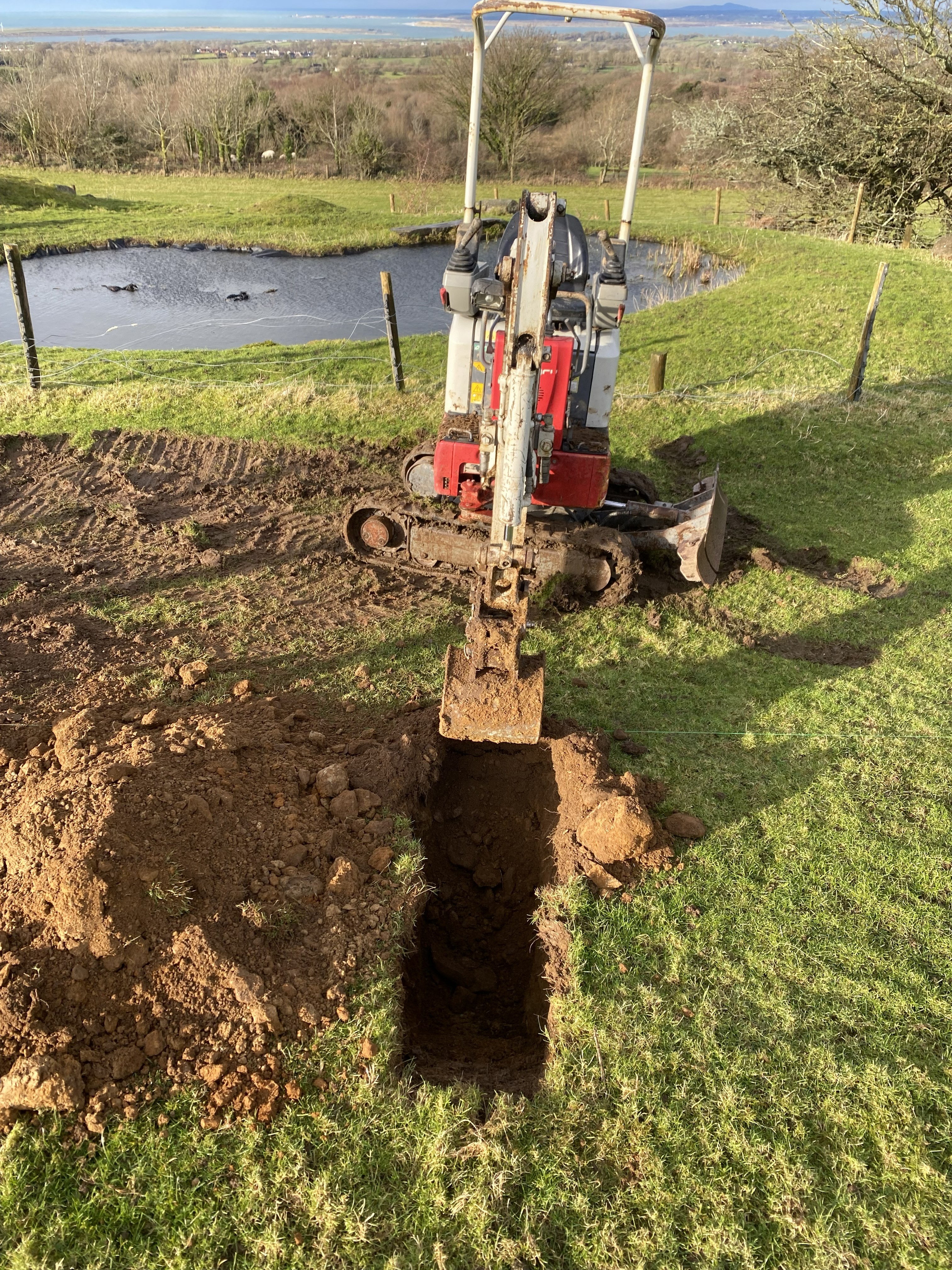
Digging the hole for the posts
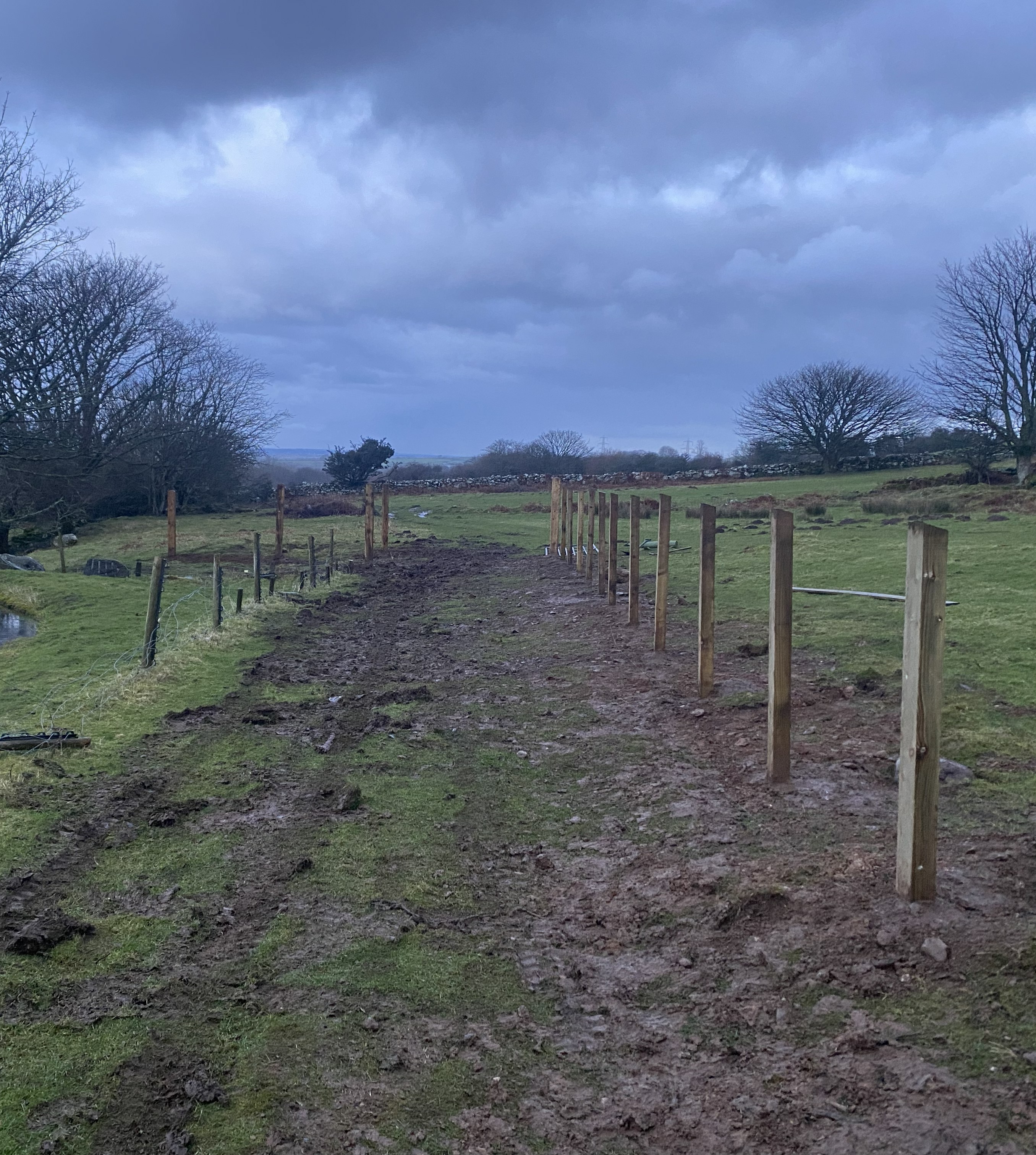
Majority of the posts in place
The start of the constrruction phase went smoothly, with the digger making light work of the holes for the posts. I had to be careful to make sure that the holes were deep enough and that the posts were level, but overall it was a very efficient process. This lasted until about halfway down the line of posts, where I started to encounter large rocks underground which made it much more difficult to dig the holes. I had to switch to a combination of hand digging and the digger for the rest of the posts, which was a much slower process, but it was necessary to ensure that the holes were deep enough and no damage came to the hire digger. Being outside from sun up to sundown for the whole project meant I had to deal with all types of Welsh weather, which made the ground very muddy and prone to slipping under the digger. This was a challenge, but I managed to continue working through it and get all of the posts in place without any major issues. In order to make sure that the posts were secure, I compacted the backfilled soil with both my bodyweight and the digger.
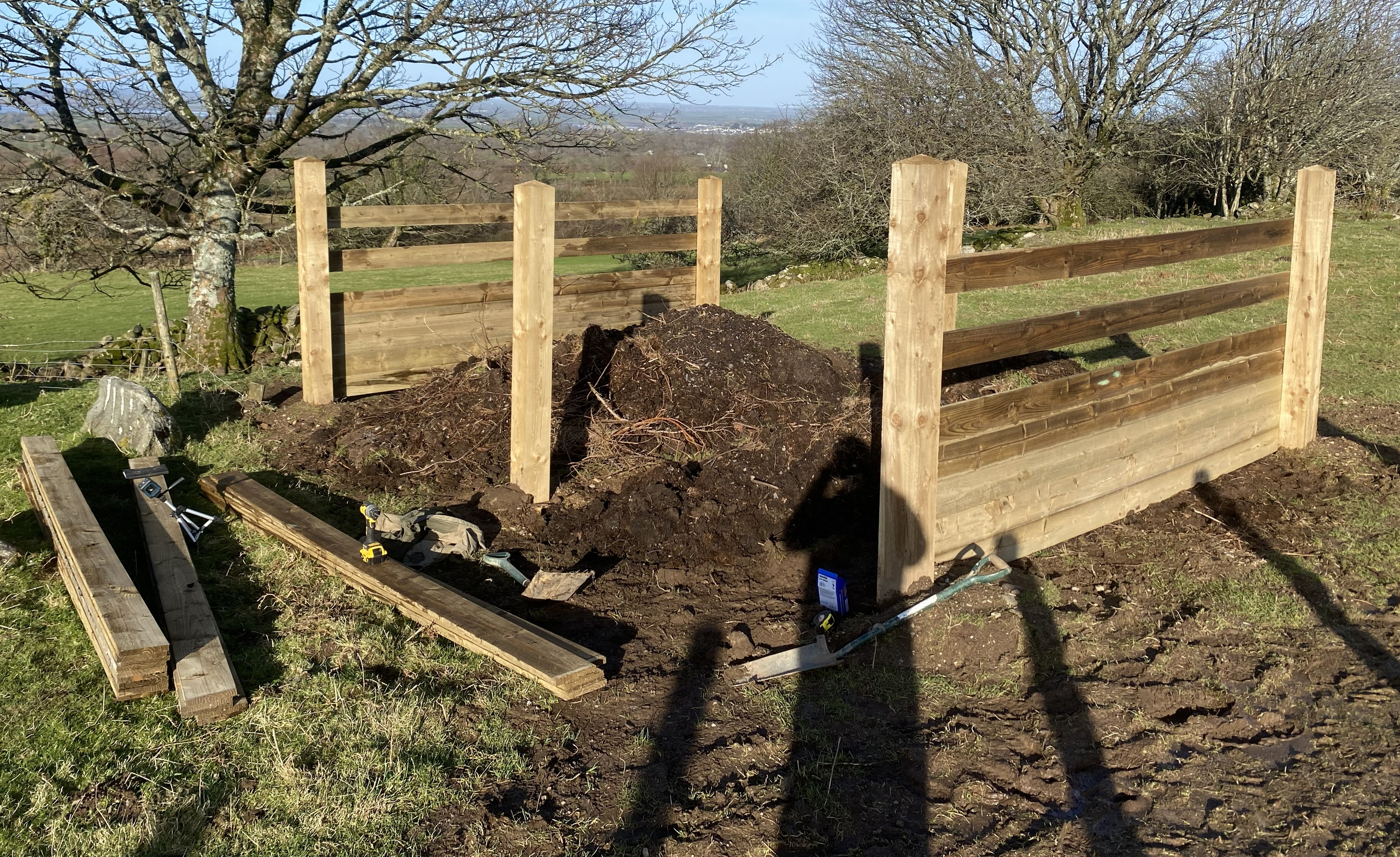
Compost heap under construction
Due to the way we had planned to hire the digger, it meant that I had to get all of the posts in before I could start on the rails and gates. This meant that I had to make sure the distances between the posts were consistently correct, as I would have to resort to hand digging if I had to move any of the posts after the digger had left. Once all of the posts were in place, I started on the back and sides of the compost heap, as we had to move the soil into the new compost heap before we could remove the old one. After that was complete, I was able to start on the rails for the main fence, which, luckily, went relatively smoothly. I only encountered a couple of issues where the rail barely reached the next post, however I was able to strengthen it with a block of wood behind it and some extra screws, which made it sturdy enough to withstand the sheep leaning on it. Next job was the gates, which required a top and bottom mount, fixed directly into the large corner posts. In this case, I had to drill a pilot hole for the top bolt, which requried a lot of precision to make sure it was in the right place, but I managed to get it right first time. The bottom fixing was a simple spike which hammered into the post after drilling a hole just big enough for it. I had to install a large gate at the end of the main fence, alongside two smaller ones on the front of the compost heap sections. In the end I managed to get these all in and aligned correctly. The final step was to add a chicken wire mesh to the bottom half of the main fence to stop lambs from getting through. This was a simple but time consuming process, as I had to make sure that the mesh was tight and secure, but it was worth it to ensure the security of the fence in the future.
What I've Learnt
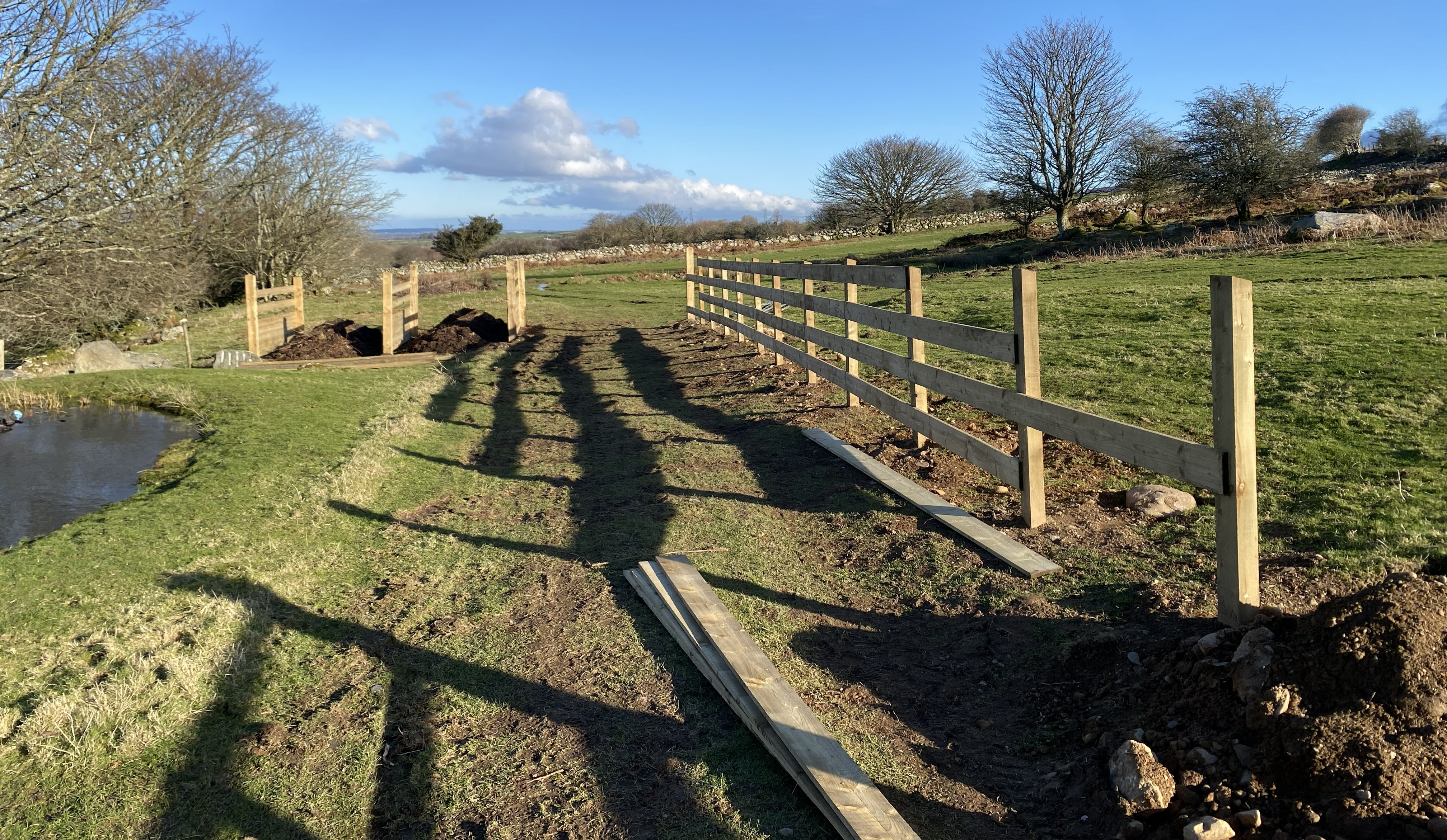
Adding the rails to the fence and compost heap
This project reminded me of the importance of the old adage: "Measure twice, cut once." I learnt many valuable lessons about the significance of planning and preparation before starting a project. It also taught me lessons about adaptability and problem-solving in real-world scenarios, and how every plan will encounter unexpected challenges. In the end I was able to solve every problem that the project threw at me, and I am very proud of the final result, as well as the skills and knowledge I gained along the way.
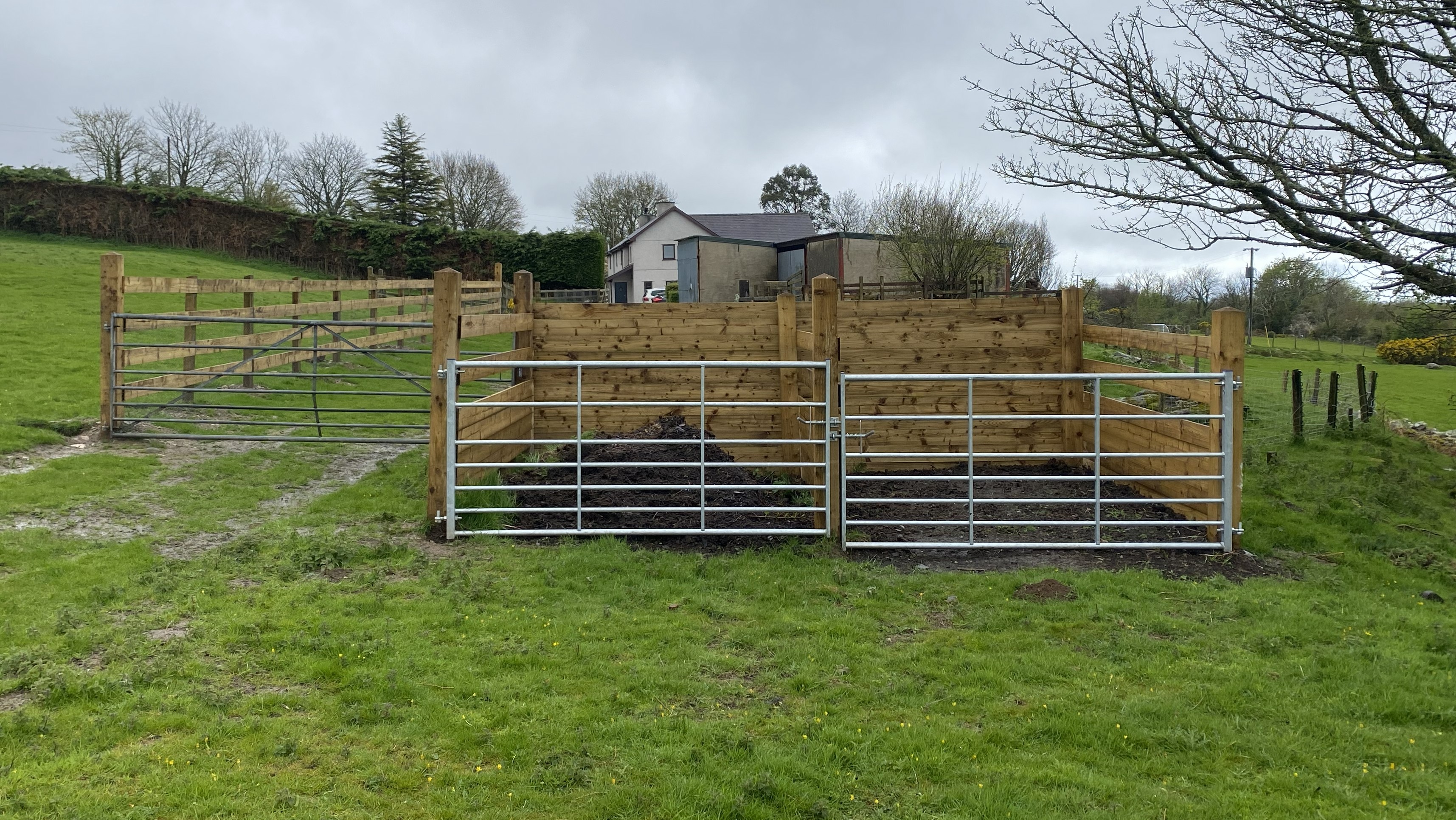
The front view of the compost heap
Beyond the technical skills I learnt, this project taught me how to manage my time effectively and work efficiently under pressure. I was battling the weather to get the project done which helped me to learn that even in miserable conditions, it matters what your mindset is and how you approach the work, rather than focusing on that which you can't control. I also now have experience managing, planning and executing a project of this scale, which is a skill that I can apply to many different areas of my life in the future.
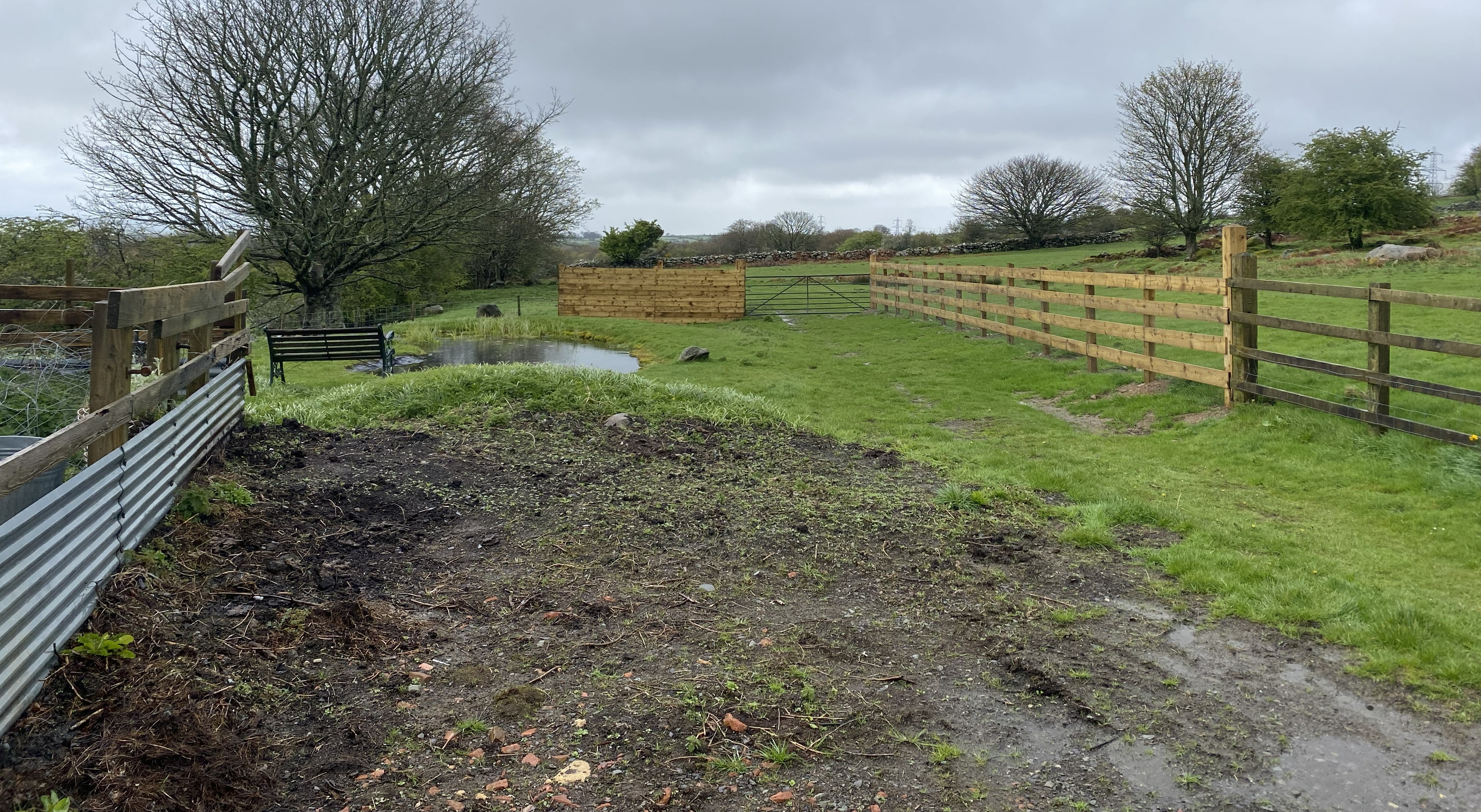
The fence as it stands today, after many days with storms and sheep